
Rulers in New Delhi and their political aides in sensitive states like Tamil Nadu have to be doubly careful not to provoke a situation whose consequences may be much more than visible now to the naked eye, notes N Sathiya Moorthy.

Paris is, and will continue to be, dogged by the usual gripes about staging the greatest show on earth.

You don't want to fight and do trade at the same time. Meanwhile, diplomacy is going on and sometimes solutions to difficult situations do not come in haste, Jaishankar asserted.

The government informed the Rajya Sabha on Monday that the war in Iraq had not significantly affected exports from India, though Gulf countries accounted for 11 per cent of the country's total exports.

Only 75 aircraft were deployed to support the invasion, observes Group Captain Murli Menon (retd).
The Obama administration is moving ahead with a 'range of steps short of war' that it hopes will forestall an Israeli attack on Iran, while forcing Tehran to take more seriously negotiations that are all but stalemated, a media report on Monday said.
The government on Tuesday said the possible war in Iraq was likely to have only a marginal impact on Indian economy as revival of domestic demand and resultant buoyancy would cushion any serious fallout.

'The war against ISIS is what earned the Kurds global recognition of being some of the best fighters that overshadowed regular armies,' points out Brigadier S K Chatterji (retd).
The US-led war against Iraq and the Severe Acute Respiratory Syndrome have led to sharp decline in demand for air travel and raised costs on account of aviation turbine fuel, the Lok Sabha was informed on Monday.
Finance Minister Jaswant Singh said on Thursday that the country's economy had successfully weathered the impact of volatility in world oil prices because of the war in Iraq and that the worst was over.
India's rice exports have not been hurt because of the war in Iraq but could face a slowdown in shipments to Kuwait, traders and analysts said on Wednesday.\n\n\n\n
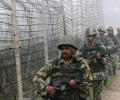
'As India progresses and takes an increasingly hardline approach to Pakistani hostility, the young and restless population of Pakistan, sooner than later, will demand 'Gazwa e Hind' (conquest of India),' warns Colonel Anil A Athale (retd).

There is no such annual parade in the United States, which is militarily the most powerful country of the world.

The nomination of Esper, who is currently serving as the Secretary of the army and previously served as a vice president for government relations at the Raytheon Company, comes days after Patrick Shanahan withdrew his nomination from the top Pentagon position.
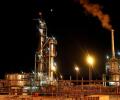
India's import of discounted crude oil from the Russian Federation hit an all-time high in May, with state-run refiner IOC becoming the biggest importer of Russian oil, relegating Reliance Industries to the second place, trade and shipping data show. Indian imports of Russian oil, accounting for over 46 per cent of its total crude oil imports in May, have grown after strong backing by New Delhi, with state-run refiners powering imports of discounted crude. Discounts on Russian oil average around $10 a barrel, said an official from a state-run refiner. IOC's May purchases rose by 64 per cent on the month, and accounted for half of its total crude imports last month, ship tracking data show.

India's historical focus on its continental borders has overshadowed its maritime ambitions, but that is changing quickly, notes Ajai Shukla.

"He's a man of tremendous talent and tremendous experience," said Trump of his new appointment.

'We have had three wars with India, and they have only brought more misery, poverty, and unemployment to the people'

External Affairs Minister Salman Khurshid on Wednesday left for Iraq on a two-day visit aimed at deepening India's ties with the oil-rich Arab country.Khurshid, the first Indian external affairs minister to visit Iraq in last 23 years, will hold talks with his Iraqi counterpart Hoshiyar Zebari and discuss bilateral, regional and international issues of mutual interest.

Taking a cue from price war in the domestic sector, two foreign carriers - Emirates and Air Asia - have cut fares for Indian travellers so as to beat the March quarter blues.

Refuting the opposition's claim that Manipur 'is burning', a senior government functionary said on Thursday that no killing has happened in the state since July 18 and asserted that peace and normalcy will be restored soon through ongoing talks with the two warring communities -- Meiteis and Kukis.

The 93-year-old British monarch and Head of the 54-member Commonwealth of nations which includes India, acknowledged the grief, pain and financial difficulties being faced the world over during this "time of disruption" and expressed the hope that the whole world was uniting in a 'common endeavour'.

Musharraf, 79, was suffering from amyloidosis, a rare disease caused by a build-up of an abnormal protein called amyloid in organs and tissues throughout the body, The Express Tribune reported.

'Even when toasting a true story, say our movies, a superstar is worth more than a real hero,' says Raja Sen.

'It was India's good fortune to have a Vajpayee lead the government at this crucial moment in history.' 'By taking the N-decision he saved future generations of Indians from being 'Kosovoed' or 'Iraqed',' says Colonel Anil A Athale (retd).

'There is a view that there is a Pakistan angle to this.' 'Pakistan has a large presence in Qatar and would want India to be blacklisted.'

A plumbing company in the American state of Texas has sued a Ford dealership in Houston for over $1 million (Rs 1.68 crore) after Islamic State terrorists were seen using his old truck, thousands of kilometres away in strife-torn Syria.
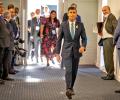
After moving into 10 Downing Street a couple of weeks go, British Prime Minister Rishi Sunak is making his first outing on the world stage.
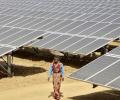
Arunabha Ghosh on why India will increasingly become an energy great power, but not an energy hegemon.

TROPEX-23 this year witnessed the participation of approximately 70 Indian Navy ships, six submarines and over 75 aircraft.

How long can Pakistan remain neutral in the Saudi Arabia-led Yemen conflict?

This Web series is more about wine, opium, sex, more sex, gay love and incest, rues Syed Firdaus Ashraf.

After news about the demise of Pakistan's former president General Pervez Musharraf was confirmed, the country's Foreign Minister Bilawal Bhutto Zardari on Sunday changed his Twitter profile picture to a photograph of his mother Benazir Bhutto and the late Nawab Akbar Bugti, in whose murder the former military ruler was named.

Six Rafale trainer aircraft will carry RB series tail numbers which stand for Air Chief Marshal R K S Bhadauria, the current Chief of Air Staff who played a key role as lead negotiator for the mega deal.

'...The more the Pakistan army becomes weaker, then there is every possibility that terrorist groups may create more anarchy in Pakistan.'

With developments like the Russia-China alliance and the rise of China in the Middle East, India's role has diminished though the India-Israel-US-UAE grouping may assume some importance in the future, observes Ambassador T P Sreenivasan.
